
Shoulder Surgeon Spokane County, WA and Coeur d’Alene, ID
The human shoulder has the largest range of motion of any joint in the human body, which means it can be subject to injuries and problems not faced by other joints, such as the hip and knee. Treatments can range from rest to shoulder surgery.
The shoulder is made up of three bones: the clavicle (collarbone), the scapula (shoulder blade), and the humerus (upper arm bone) as well as associated muscles, ligaments and tendons.
The articulations between the bones of the shoulder make up the shoulder joints. The major joint of the shoulder is the glenohumeral joint, which “shoulder joint” generally refers to. In human anatomy, the shoulder joint comprises the part of the body where the humerus attaches to the scapula, the head sitting in the glenoid fossa. The shoulder is the group of structures in the region of the joint.The shoulder must be mobile enough for the wide range actions of the arms and hands, but also stable enough to allow for actions such as lifting, pushing and pulling. The compromise between mobility and stability results in a large number of potential shoulder problems.
What Causes Shoulder Problems?
Many shoulder problems are caused by the breakdown of soft tissues in the shoulder region. Using the shoulder too much can cause the soft tissue to break down faster as people get older. Doing manual labor and playing sports may cause shoulder problems.
Shoulder pain may be felt in one small spot, in a larger area, or down the arm. Pain that travels along nerves to the shoulder can be caused by diseases such as:
- Gallbladder disease
- Liver disease
- Heart disease
- Disease of the spine in the neck.
How Are Shoulder Problems Diagnosed?
Doctors diagnose shoulder problems by using:
- Medical history
- Physical examination
- Tests such as x-rays, ultrasound, and magnetic resonance imaging (MRI).
How Are Shoulder Problems Treated?
Shoulder problems are most often first treated with RICE (Rest, Ice, Compression, and Elevation):
- Rest. Don’t use the shoulder for 48 hours.
- Ice. Put an ice pack on the injured area for 20 minutes, four to eight times per day. Use a cold pack, ice bag, or a plastic bag filled with crushed ice wrapped in a towel.
- Compression. Put even pressure (compression) on the painful area to help reduce the swelling. A wrap or bandage will help hold the shoulder in place.
- Elevation. Keep the injured area above the level of the heart. A pillow under the shoulder will help keep it up.
If pain and stiffness persist, see a doctor to diagnose and treat the problem.
What Are the Most Common Shoulder Problems?
- Dislocation
- Separation
- Rotator Cuff Disease: Tendinitis and Bursitis
- Rotator Cuff Tear
- Frozen Shoulder
- Fracture
- Arthritis of the Shoulder
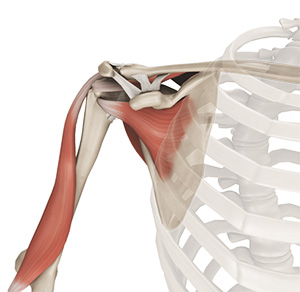
Anatomy of the Shoulder
The shoulder is the most flexible joint in the body that enables a wide range of movements including forward flexion, abduction, adduction, external rotation, internal rotation, and 360-degree circumduction. Thus, the shoulder joint is considered the most insecure joint of the body, but the support of ligaments, muscles, and tendons function to provide the required stability.
- Shoulder Arthroscopy
- Rotator Cuff Repair
- Shoulder Labrum Reconstruction
- Shoulder Stabilization
- SLAP Repair
- Reverse Shoulder Replacement
- Revision Shoulder Replacement
- Shoulder Reconstruction Surgery
- Outpatient Shoulder Replacement
- AC Joint Arthroplasty
- Revision Shoulder Arthroplasty
- Arthroscopic Bankart Repair
- Shoulder Surgery
- Shoulder Capsular Repair
- Shoulder Anterior Labral Repair
- Minimally Invasive Shoulder Joint Replacement
- Arthritis of the Shoulder
- Dislocation
- Separation
- Rotator Cuff Tear
- Frozen Shoulder
- Shoulder Fracture
- Shoulder Instability
- Shoulder Labral Tear
- Shoulder Ligament Injuries
- Shoulder Bursitis
- Shoulder Tendonitis
- Shoulder Labral Tear with Instability
- Anterior Shoulder Instability
- Acromioclavicular (AC) Arthritis
- Shoulder Impingement
- SLAP Tears
- Rotator Cuff Pain
- Proximal Humerus Fractures
- Biceps Tendon Rupture
- Proximal Biceps Tendon Rupture
- Rotator Cuff Bursitis
- Rotator Cuff Disease: Tendinitis and Bursitis
